Thracian Gladiator
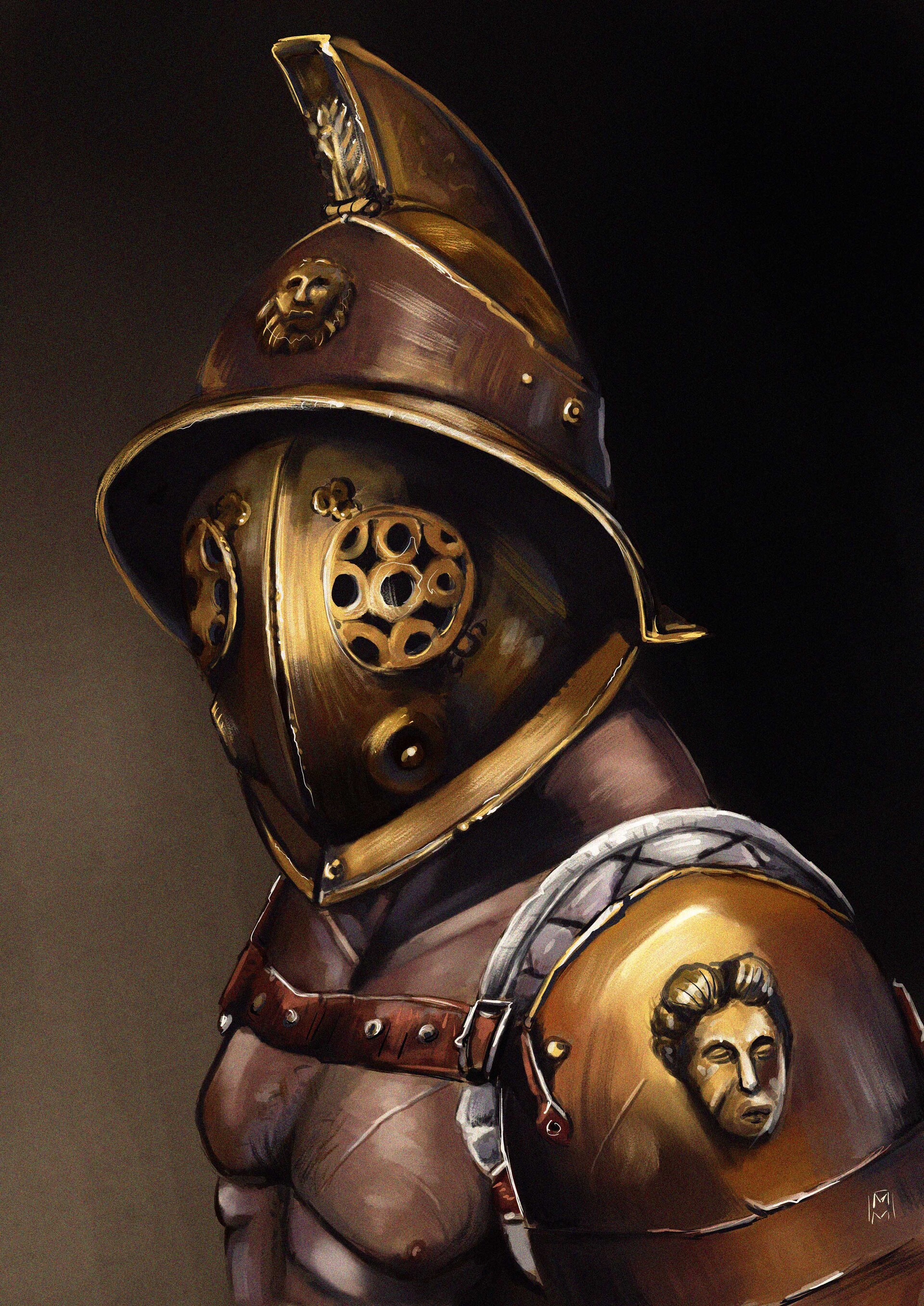
The Thraex (on the painting), or Thracian, was a type of Roman gladiator, armed in the Thracian style with a small rectangular, square or circular shield called parmula (about 60 x 65 cm) and a short sword with a curved blade called a sica.
His other armour included armoured greaves, a protective belt above a loincloth, and a helmet with a side plume, visor and high crest.
The earliest types of gladiator were named after Rome's enemies of that time: the Samnite, Thracian and Gaul. The Samnite, heavily armed, elegantly helmed and probably the most popular type, was renamed secutor and the Gaul renamed murmillo, once these former enemies had been conquered then absorbed into Rome's Empire. In the mid-republican munus, each type seems to have fought against a similar or identical type. In the later Republic and early Empire, various "fantasy" types were introduced, and were set against dissimilar but complementary types. For example, the bareheaded, nimble retiarius ("net-man"), armoured only at the left arm and shoulder, pitted his net, trident and dagger against the more heavily armoured, helmeted Secutor. Most depictions of gladiators show the most common and popular types. Passing literary references to others has allowed their tentative reconstruction. Other novelties introduced around this time included gladiators who fought from chariots or carts, or from horseback. At an unknown date, cestus fighters were introduced to Roman arenas, probably from Greece, armed with potentially lethal boxing gloves.
painting process